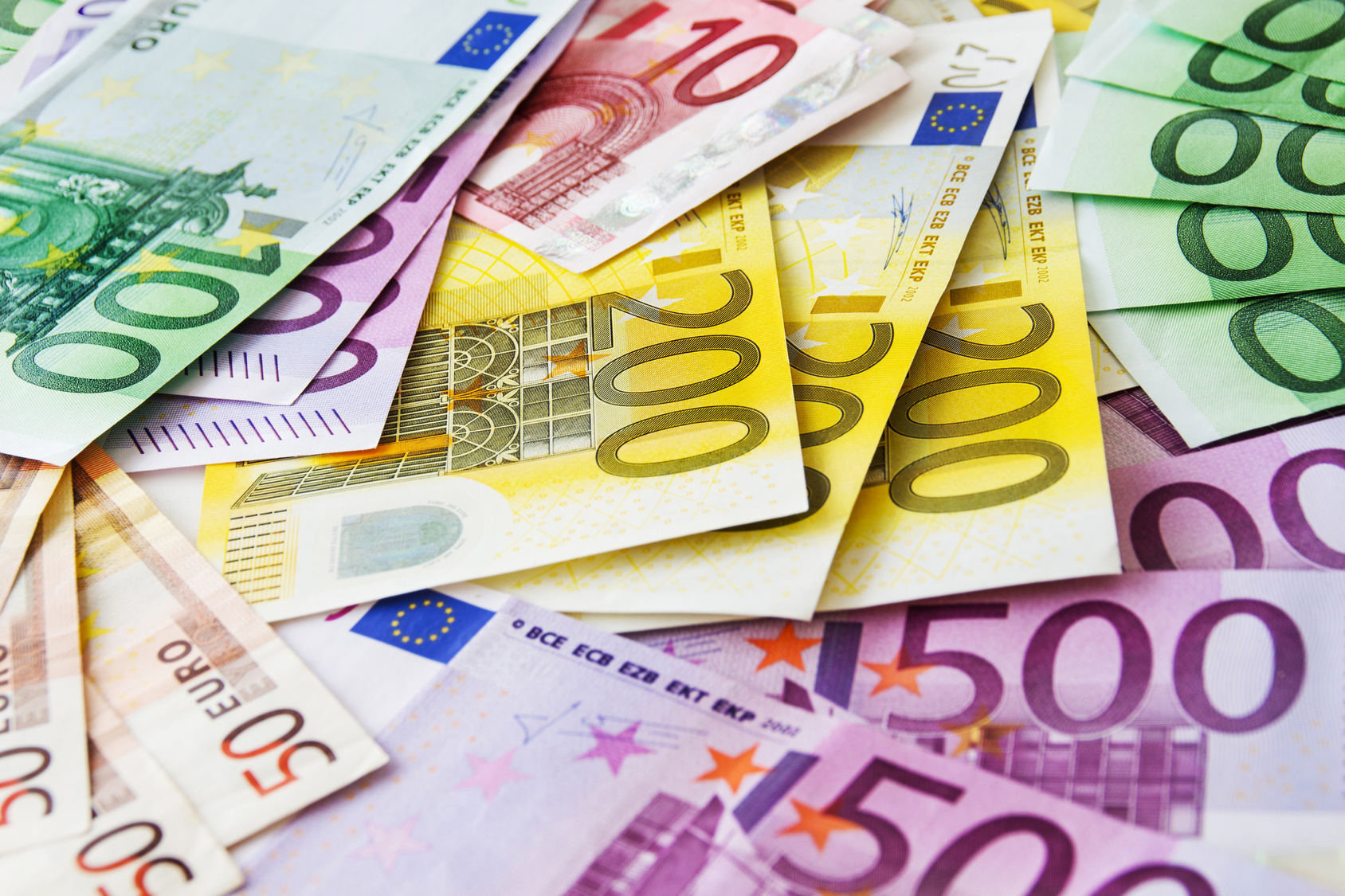
Germany spent the lordly sum of 57 billion euros on environmentally harmful subsidies in 2012, for example in the coal and lignite industries. These funds can be put to better use in future. Read more about it in the new issue of the “UBA aktuell” Newsletter.
In close connection with this issue we are also issuing recommendations for the urgently needed turnaround in agricultural policy. Public funding may not be allocated to any type of activity which harms the environment or incurs high costs borne by the general public – for example for the removal of nitrate from our drinking water.
Our report Air Quality 2016 also reflects the topic of subsidies. Subsidized diesel for automobiles is one of the main reasons that the limit value for nitrogen dioxide is exceeded at more than half of the measuring stations located near traffic.
We wish you interesting reading.
Yours sincerely, Press Office at the German Environment Agency
Environmentally harmful subsidies harm the environment, taxpayers and society
Der Abbau umweltschädlicher Subventionen schafft finanzielle Freiräume für eine nachhaltige Politik.
Quelle: PhotoSG / Fotolia.com
Taxpayers pay threefold when it comes to environmentally harmful subsidies: once for the subsidies themselves; secondly for the environmental and health damage they cause – due to greenhouse gas emissions and air pollution from electricity produced from lignite, which was subsidized to the tune of some 16.7 billion euros in 2014. And thirdly, for the promotion of environmentally friendly alternatives, including renewable energy so that its sources are able to compete with the subsidized fossil fuels used to produce electricity.
Nevertheless, the pace at which environmentally harmful subsidies are being phased out has faltered for years. The new UBA report traces some 57 billion euros in environmentally subsidies granted in 2012, in particular in the transport and energy sectors. More than 90 per cent of these subsidies are a burden on the climate – and are therefore thwarting Germany's implementation of the Paris Agreement. The exemption from energy tax on kerosene, for example, promotes highly climate-damaging air traffic with subsidies worth more than 7 billion euros.
Tax breaks for electricity and energy granted to businesses take away the incentive to save energy. Subsidies in the agriculture sector also play a role in climate change, traceable to the refund on agricultural diesel, EU support for agriculture and the VAT privilege for animal products such as meat and milk.
The UBA report makes concrete proposals for reform with respect to phasing down these subsidies and formulates some initial principles for a subsidy policy which is environmentally sound. Such a policy would not only relieve the strain on the environment, it would also provide scope for action to finance important tasks for the future or to cut taxes.
Our meat consumption has a major impact on our environment. Nitrate inputs to groundwater, ammonia in the air and antibiotics in the soil are but a few examples. Unless we change our eating habits, mainly by eating far less meat, it will be very difficult to effectively protect our environment and climate. read more (in German)
Ethanol fireplaces pollute the indoor air
Ethanol fireplaces are becoming more and more popular in private homes. They are both decorative and provide heat. Since they have no exhaust system there is no requirement for inspection by the chimney sweep. At first glance, this might seem an advantage and make the use of ethanol fireplaces appealing, but the combustion of bioethanol generates pollutants which contaminate the indoor air. read more (in German)
UBA positions
Agricultural policy faces a crucial decision
At an agricultural conference which focused on an ecological and just future in the agriculture sector, experts from science, government, environment and agriculture concluded that current agricultural policy cannot continue as is. "It is high time to take action", says Maria Krautzberger, President of the German Environment Agency and event co-organiser. read more (in German)
2015 wurden in Deutschland insgesamt 901,9 Millionen Tonnen CO2-Äquivalente ausgestoßen. Das sind 2,3 Millionen Tonnen bzw. 0,3 Prozent weniger als 2014 und 27,9 Prozent weniger im Vergleich zu 1990.
Der Vorrat an organisch gebundenem Kohlenstoff im Boden steht im Zusammenhang mit vielen essenziellen Ökosystemdienstleistungen. Ein Rückgang dieses Vorrats kann auf eine Verschlechterung bzw. sogar auf den Verlust von Böden hindeuten. Daher wird ihm eine besondere Rolle als möglicher Indikator bei der Umsetzung der bodenbezogenen globalen Nachhaltigkeitsziele zugeschrieben.
Coal-fired power: 50 per cent less by 2030 can and must be achieved
The aim of the Federal Government's Climate Action Plan 2050 is unmistakable: by 2030 the energy sector must reduce its greenhouse gas emissions by more than half the levels in 2014. In addition, coal-fired power production must also be more than halved by 2030, says a new study. read more (in German)
Possible health effects of wind turbines
Wind-powered installations produce zero-carbon electricity, have no air emissions when in operation and occupy less space compared to other technologies which use renewable energy. But what about their health impact? The position paper Mögliche gesundheitliche Effekte von Windenergieanlagen [Possible health effects of wind turbines] summarises the latest scientific findings on the topic. read more (in German)
How to design resource labelling for products
How can products be labelled in such a way that consumers can easily see how much water, energy and other resources were consumed for their production? An UBA research project has developed proposals based on the examples of the notebook and washing machine. read more (in German)
Sammelstationen für Meeresmüll, Fassaden, die atmen oder bionische Trennwände für Flugzeuge: Der Bundespreis Ecodesign sucht auch 2017 mutige Design-Pioniere und Erfinder nachhaltiger Produkte. Bewerben können sich Unternehmen, Designagenturen, Start-Ups und Studierende. Die Bewerbungsfrist endet am 10. April 2017.
Environment-friendly procurement in computer centres
Electricity consumption in computer centres has spiked in recent years due to greater demand. The continuing trend of digitalisation is expected to further increase that demand in future. Computer centres have significant potential to save energy and costs. The new UBA guide on environment-friendly procurement can be used as a point of reference. read more (in German)
Metal-working: PECM process saves 80 per cent energy
High-strength metal materials are among others used for building gas turbines. Boring, turning or grinding is very time and energy-consuming. A new electrochemical machining process (PECM) developed in a project carried out under the Environmental Innovation Programme, reduced the time and energy required for these processes to one-fifth of the norm. read more (in German)
Limestone plants can halve energy needed for milling
There is a great untapped potential to save electricity in the milling of quicklime in industry and food and steel production. A project under the Environmental Innovation Programme successfully launched the first operating phase of an innovative, efficient mill which saves 40 per cent energy. Further optimisation by the manufacturer aims to halve power consumption. read more (in German)
Environmental innovation in quarrying
In a project funded under the Environmental Innovation Programme, the MSW Mineralstoffwerke Südwest GmbH & Co. KG increased the raw material efficiency of the quarry in Mönsheim (Baden-Württemberg) from roughly 65 per cent to more than 90 per cent. A new process improves the removal of the clay adhesions on the mined limestone, thus reducing the amount of scrapped material. read more (in German)
New test method for substances released from construction products
The new European test method DIN CEN/TS 16637-3 facilitates CE labelling based on data about the environmental performance of construction products. read more (in German)
Environment at municipal level
30km/h speed limit on major roads is effective
What has the impact of the 30km/h speed limit been on major municipal roads? The answer is unclear in many locations. UBA has compiled and published the findings from measurements and analyses. Its conclusion: the 30km/h speed limit greatly improves environmental quality, safety and traffic flow. Local residents feel relieved. read more (in German)
Vernetzt unterwegs: Good practice examples in German cities
Mobility without an own car? Finding the right mode of transport for every occasion? A one-stop access point for all modes of transport with one end-of-the-month bill for all trips taken? Does that work? The ecologically minded motor club Verkehrsclub Germany (VCD) has identified integrated – multimodal – services which link local public passenger transport with car and bike sharing. read more (in German)
Um die Datenlage zum Human-Biomonitoring in den Mitgliedstaaten der EU anzugleichen und die gesundheitlichen Folgen der Schadstoffbelastung besser zu verstehen, fördert die EU-Kommission das Projekt „European Human Biomonitoring Initiative – HBM4EU“ mit über 74 Millionen Euro. Ziel ist die Zusammenführung bereits vorhandener Daten und die Durchführung gemeinsamer Studien.
Gemeinsam mit dem Umweltministerium und der Agentur für internationale und interregionale Beziehungen des Kaliningrader Gebietes der Russischen Föderation veranstaltete das Umweltbundesamt am 27.10.2016 in Kaliningrad den 13. Deutsch-Russischen Umwelttag mit über 130 Teilnehmerinnen und Teilnehmern.
Das Umweltbundesamt förderte und begleitete mit Unterstützung des Bundesamtes für Naturschutz drei Jahre lang das Beratungshilfeprojekt „Umweltverträgliche Raumnutzungskonzepte für den Ostseeküstenraum der Russischen Föderation“. Das Abschlusssymposium fand am 25.10.2016 im Rahmen des XV. All-Russian Forum "Strategic Planning in the Regions and Cities of Russia“ in St. Petersburg (Russland) statt.
Law & legislation
Packaging Act: Recycling bin is only an option
The German Environment Agency welcomes the recycling of packaging which the new Packaging Act aims to ensure – through higher rates of recycling and differential licence fees for more readily recycled packaging. However, it is unfortunate that the legislation did not make use of the recycling bin (Wertstofftonne) a statutory requirement. read more (in German)
UBA news
Prof. Dr. Hansjürgens appointed to head Soil Protection Commission
UBA's President Maria Krautzberger appointed Prof. Dr. Bernd Hansjürgens as new Chairman of the Soil Protection Commission (KBU) at UBA in early 2017. He succeeds Prof. Dr. Franz Makeschin who retired in late 2016 after 8 years in office. read more (in German)
In May 2013 the chemical hexabromocyclododecane, or HBCD, was identified as a persistent organic pollutant (POP) under the international Stockholm Convention. This means that a worldwide ban on the sale and application of the chemical will soon become effective. For a long time HBCD was the most economically significant flame retardant used in polystyrene foam for insulation materials. We have…
This guidance document has been developed in the project “Implementation and enforcement of EU regulations on fluorinated greenhouse gases (F-gases) and ozone-depleting substances (ODS) in Bulgaria”. The objective of the document is to support Bulgaria in maximising its regulatory and enforcement capabilities with a focus on market surveillance and inspections of companies. It summarises the…
In order to reduce greenhouse gas emissions, cooling technologies based on natural refrigerants with negligible or insignificant effect on the environment and climate have experienced a renaissance in recent years. A variety of highly efficient applications has been developed and has now reached a technical level that makes their use economically viable. Nevertheless, natural refrigerants require…
In order to reduce greenhouse gas emissions, cooling technologies based on natural refrigerants with negligible or insignificant effect on the environment and climate have experienced a renaissance in recent years. A variety of highly efficient applications has been developed and has now reached a technical level that makes their use economically viable. Because natural refrigerants require…