Welcome to the new issue of ‘The Latest from UBA’!
Whether you live in a detached house or are part of a homeowners’ association in an apartment building, there is often great uncertainty about which heating system will be the most suitable in the future and whether switching to a heat pump is a good choice. In this newsletter, we present our wide range of information on this topic, including the new online building check. We also use solid facts to debunk widespread myths about waste separation and packaging recycling in Germany and take a look at how Germany can achieve its climate target for 2040 and expand solar energy in an environmentally friendly way.
We hope you find it an interesting read
Your UBA Press and Public Relations team
Tips, real-life examples and a new online building check to support the switch to a heat pump
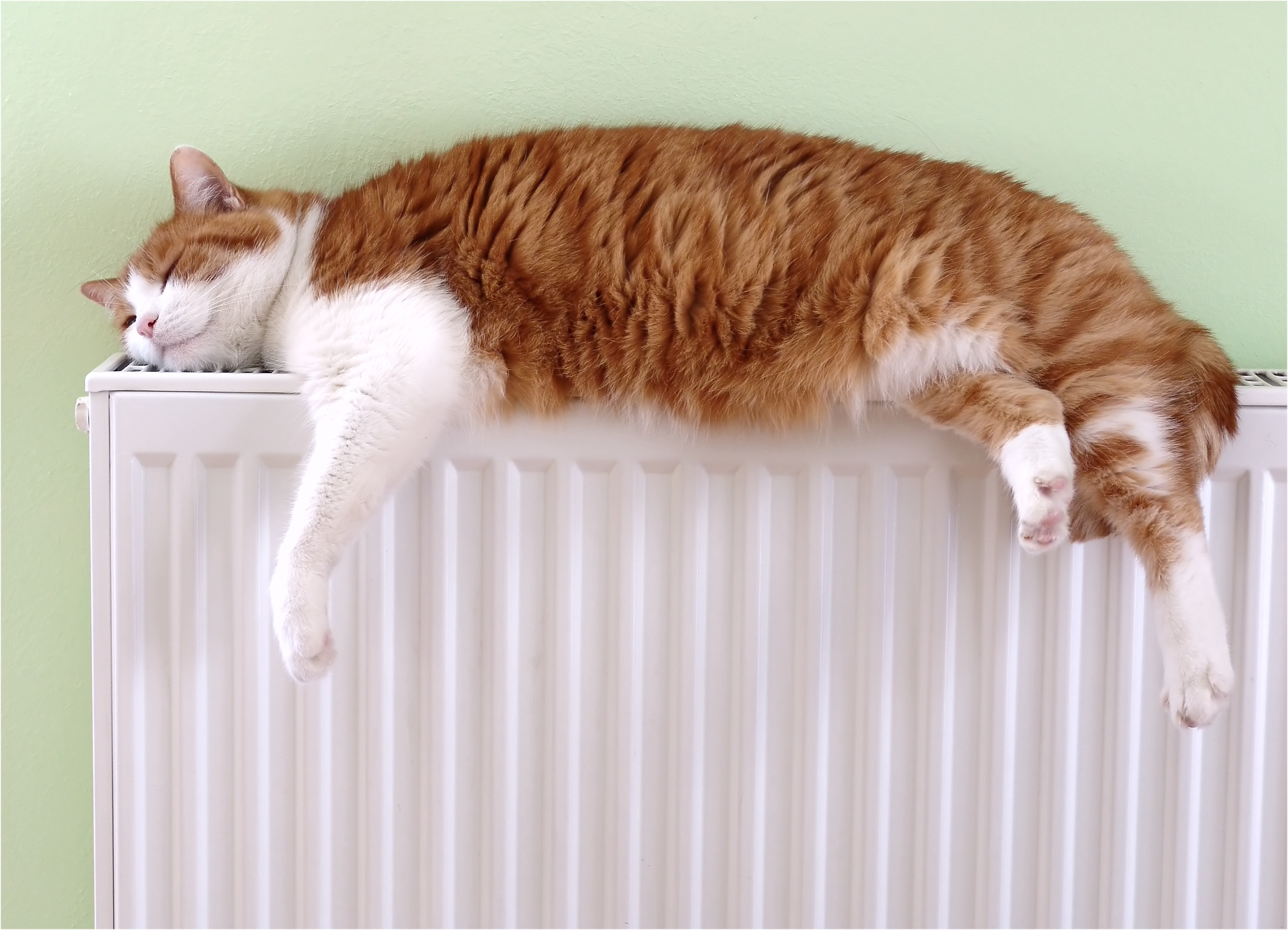
Heat pumps work efficiently even in older buildings with radiators.
Source: Tripod / Fotolia.com
Oil and gas heating systems are by far the largest sources of climate-damaging CO₂ emissions in private households. Switching to a heating system which uses renewable energy protects the climate, reduces dependence on price fluctuations of imported fossil fuels and, in Germany, is gradually becoming a legal requirement even for existing buildings when a previous heating system is damaged beyond repair. Since green hydrogen, synthetic or bio-methane and wood are only available in limited quantities or, just like direct electric heating, are not a cost-effective source of heating, a heat pump is usually the best choice for buildings without access to district heating. It uses free heat from the ground, water or air and generates around four kilowatt-hours of heat from one kilowatt-hour of electricity, based on the proven working principle of a refrigerator, just in reverse.
The German Environment Agency (UBA) supports homeowners in their decision-making with practical tips and first-hand reports on heating replacement and heat pumps, and now also with a new online tool: the “Heat Pump Building Check”, developed on behalf of UBA, enables homeowners to quickly and free of charge find out whether their property is already “heat-pump-ready”, whether simple measures will suffice, or whether energy-efficiency renovation measures should be carried out first.
Many existing buildings can be heated efficiently with a heat pump as they are, or with low-cost changes, such as replacing a few smaller radiators with larger ones. It is a worthwhile investment that is currently subsidised by the German government and will pay off financially in the long run, since fossil fuels are expected to become more expensive due to rising CO₂ prices in the national and European emissions trading systems. Estimates suggest increases of 4 to 8 cents per kilowatt-hour for natural gas and 5 to 10 cents per kilowatt-hour for heating oil by 2030.
Climate change is advancing rapidly. This makes it all the more important to effectively align economic, societal and political action with the goal of achieving greenhouse-gas neutrality in Germany by 2045. A new study by the German Environment Agency (UBA) shows that this target can still be reached. The short-term climate targets for 2030 must continue to be pursued consistently.
Climate change is accelerating and threatens the foundations of our lives – but there is still time to act. Solar power plays a crucial role in this transition. A new analysis by the German Environment Agency (UBA) shows that if land for solar installations is chosen wisely, solar capacity can be expanded rapidly while safeguarding areas of high ecological and agricultural value.
Revenue from the European and the national emissions trading systems in Germany totaled €21.4 billion in 2025. Revenues from these two central market-based climate policy instruments were thus well above the previous year’s result (€18.5 billion). This was reported by the German Emissions Trading Authority (DEHSt) at the German Environment Agency (UBA).
Germany’s gross electricity generation from renewable energy is expected to reach 292 terawatt-hours (TWh) in 2025, about 2 percent higher than last year’s output.
For 10 years, the Blauer Kompass Award of the federal government has regularly given recognition to innovative projects for climate preparedness and for adapting to the impacts of climate change. The new round of the competition has started, and for the first time, it also includes a dedicated application category for schools. The application deadline is 20 March 2026.
The Role of Cooperation within the Climate Club and Beyond
Broad and ambitious climate action is urgently needed since the Paris Agreement’s goals are still out of sight. While globally aligned and joint climate policy measures would be the best solution to avoid carbon leakage, in their absence, alternative measures can address carbon leakage risks. However, they can also result in fragmentation and inefficiencies. This paper provides an overview of how…
Options for Germany to engage in cooperative approaches and identifying suitable mitigation activities
The level of ambition of Parties' current Nationally Determined Contributions (NDCs) is insufficient to ensure that climate change remains within the internationally agreed limits. One way to close this ambition gap is through Article 6 of the Paris Agreement. This report analyses how Germany could use Article 6.2 by looking at the supply and demand side of cooperative approaches and concludes…
Advantages and disadvantages of carbon credits compared to other funding instruments
This publication analyses the advantages and disadvantages of carbon credits compared to other financing instruments for protecting and restoring coastal ecosystems. Nine instruments are examined, including emission credits, biodiversity certificates, development cooperation, and blue bonds. Several aspects such as scalability, financial stability, carbon accounting, and project integrity are…
Opportunities and risks of current carbon crediting methodologies
This report examines the risks and opportunities of using carbon crediting mechanisms to fund the protection and restoration of coastal ecosystems. It evaluates seven projects registered in the voluntary carbon market, focusing on key challenges related to integrity risks such as additionality, quantification, permanence, safeguards, and double counting. Despite uncertainties in measurement…
The energy efficiency of lighting technology products has so far been assessed primarily using inadequate parameters (such as luminous flux and luminous efficacy), and only part of the benefits provided by lighting products is taken into account. As a result, products that provide a higher level of service tend to perform worse in terms of EU requirements and are at risk of being forced off the…
Interim report: Future carbon flows and their monitoring
The report examines possible paths to a circular carbon economy and the challenges of transparently recording these carbon flows, which are required by international reporting obligations such as the Paris Agreement and the Federal Climate Protection Act. A two-step method is used: First, the relevant carbon flows are visualized to provide an overall understanding. This visualization is based on…
The aim of the project was to validate an extended one-generation reproduction test with zebrafish (ZEOGRT).
The method is used to investigate potentially hormone-active substances and comprises an adult parental reproduction phase (F0), a complete filial generation (F1) and the hatching of a second filial generation (F2). The method can detect potential estrogenic and androgenic mechanisms of…
Arbuscular Mycorrhizal Fungi (AMF) are recognized as important providers of ecosystem services, supporting soil health and key soil functions. Their ecological relevance and sensitivity to chemicals led the European Food Safety Authority (EFSA) indicate AMF as a potential group of non-target test organisms for future Ecological Risk Assessment schemes (ERA) for Plant Protection Products (PPPs)…
The formation of NER in simulation studies on degradation in the environment is an issue addressed in all European regulations on chemical substances. Some of these residues can be released back into the environment over the long term. This proportion must therefore be considered in the persistence assessment. The project summarised existing proposals for characterising the different NER types…
UBA invites to the final conference of the EU project “NiCE” on March 11–12, 2026, at the UBA headquarters in Dessau-Roßlau. Together with cities, regions, networks, NGOs, and initiatives, we want to discuss ways to promote sustainable consumption structures in city centers.
At their annual press conference on 27 January, the German Environment Agency (UBA) and the Central Agency Packaging Register (ZSVR) presented the latest figures on packaging recycling. Common misconceptions about plastics and glass recycling prove unfounded upon closer inspection.
Sustainability / Strategies / International matters
With space activities expanding rapidly, environmental challenges in orbit and on Earth are increasing as well. The trend report highlights how satellite-based applications can support climate action and environmental monitoring, while also showing how rising launch numbers, new actors, expanding satellite constellations, and less visible developments such as new launch sites or planned in-orbit…
Lessons learned from Brazil, Colombia, Japan, New Zealand, Panama, Rwanda and Sweden
The triple planetary crisis of climate change, biodiversity loss and environmental pollution threatens the long-term sustainability of human development and well-being. Addressing these crises requires integrated approaches since underlying drivers and pressures are strongly interconnected. This policy paper analyses examples of best practices of integrated solutions, as well as cross-sectoral…
In 2026, the German Prize for Nature Writing enters its ninth call for submissions. The prize is awarded by Matthes & Seitz Berlin in cooperation with the German Environment Agency and the Art and Nature Foundation. The award includes prize money of EUR 10,000 and is under the patronage of the President of the German Environment Agency, Dirk Messner.
Imprint
Umweltbundesamt Präsidialbereich / Presse- und Öffentlichkeitsarbeit, Internet; Pressesprecher Wörlitzer Platz 1 06844 Dessau-Roßlau E-Mail: buergerservice@uba.de