
News
- The new national Kälte-Klima-Richtlinie came into force on 1 March 2024. By the end of 2026, companies can apply to BAFA for funding for energy-efficient stationary refrigeration and air conditioning systems using natural refrigerants.
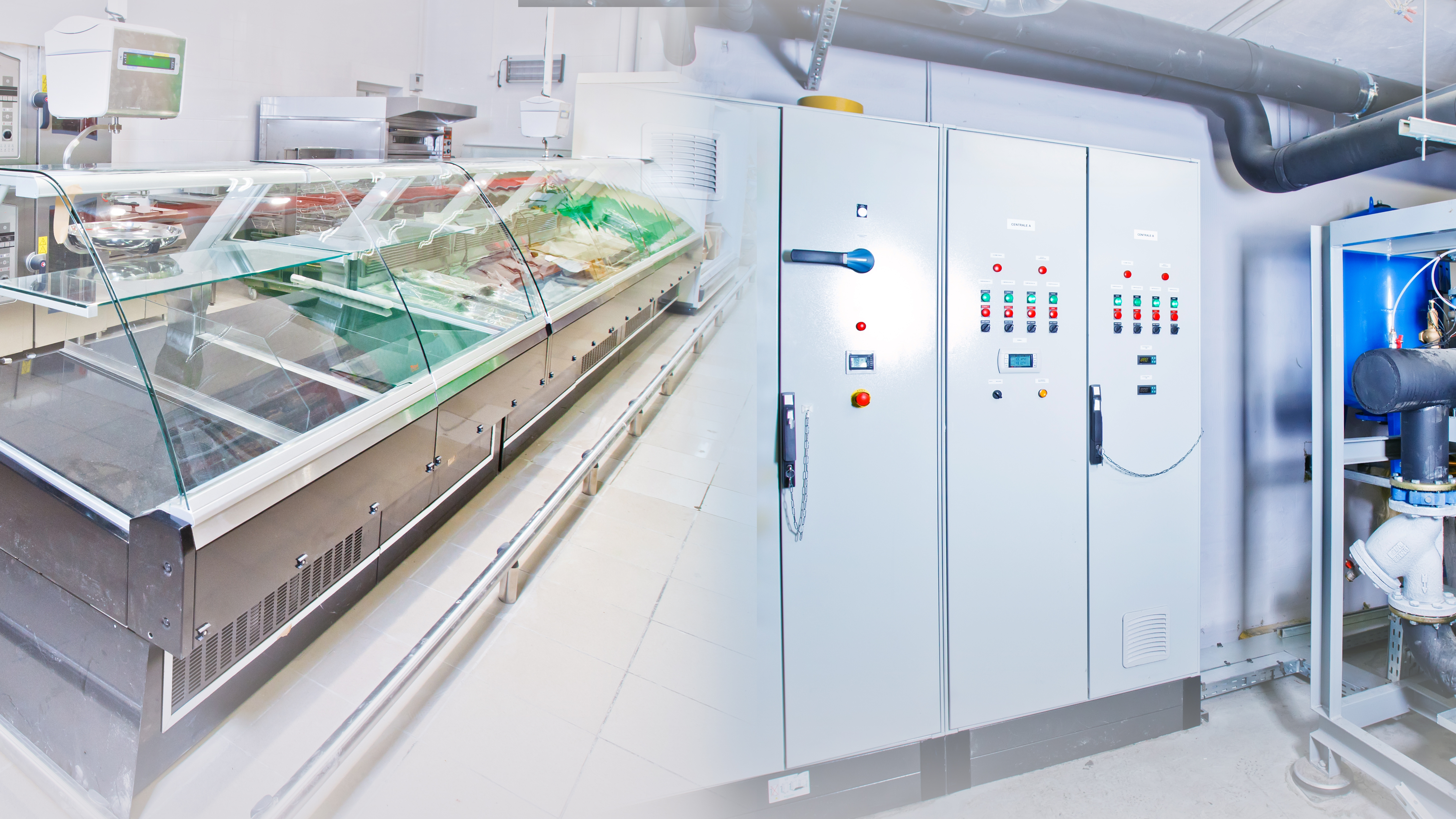
Commercial refrigeration systems are used to keep goods fresh and deep-frozen, especially foodstuffs, but also flowers and pharmaceutical products. They are installed, for example, in specialist food retailers and in catering applications. Nowadays, climate-friendly solutions with natural refrigerants are available for all system technologies.
Commercial refrigeration covers a wide range of applications that are important in everyday life. This includes specialist food shops such as bakeries and butchers, but also small food shops, kiosks, petrol station shops, flower shops, pharmacies, businesses in the catering and accommodation sector (e.g. hotels) and many other areas. Strictly speaking, supermarket refrigeration also counts as commercial refrigeration, but it is often considered separately due to the different equipment and size of the refrigeration technology.
For the safety of many retail goods such as food or pharmaceuticals, maintaining an unbroken cold chain is of great importance. For cooling in commercial refrigeration, plug-in refrigeration units are often used, as well as condensing units or small compound systems for larger refrigeration requirements. In total, over 2 million refrigeration systems were installed in commercial refrigeration in Germany in 2017.
In commercial refrigeration, the use of fluorinated, climate-damaging refrigerants can be completely dispensed with. For plug-in refrigeration units, the use of natural refrigerants such as propane and carbon dioxide (CO2) has long been state of the art. For condensing units, the market supply of natural refrigerants is continuously increasing. The refrigerant propane is also increasingly being used in indirect systems with chillers, e.g. for air conditioning and refrigeration in hotels or butcher's shops. All refrigeration systems with natural refrigerants can be operated very energy-efficiently and are more climate-friendly than comparable systems with fluorinated refrigerants.
In Germany, companies can apply for funding for newly constructed or newly installed stationary refrigeration and air conditioning systems that are operated with non-halogenated refrigerants via the Kälte-Klima-Richtlinie issued by the Federal Ministry of Economics and Climate Protection. The efficiency conversion of existing small refrigeration units is also subsidised if they use hydrocarbon refrigerants or if they are converted to these natural refrigerants. Since 2024, refrigeration systems including the associated components and systems that are primarily used to cool refrigerated display cabinets as well as plug-in refrigerated display cabinets are no longer eligible for funding.
The Regulation (EU) 2024/573 on fluorinated greenhouse gases, which came into force on 11 March 2024, and its predecessor regulations will gradually reduce the availability of HFC refrigerants and reduce them to zero by 2050. HFC refrigerants are already only available to a limited extent, including for the maintenance and repair of refrigeration and air conditioning systems. This also affects HFC refrigerant blends with a medium global warming potential (GWP) that have recently come onto the market, such as R-454C (GWP = 146), R-455A (GWP = 146) or R-513A (GWP = 629). These blends contain unsaturated HFCs (e.g. R-1234yf) and are used in condensing units, among other things. As a result of the artificial shortage, prices for HFC refrigerants have also risen in recent years. Natural refrigerants, on the other hand, are not subject to shortages and are therefore recommended alternatives.
According to the F-Gas Regulation, there are also relevant bans for commercial refrigeration: from 1 January 2025, refrigerators and freezers for commercial use as well as self-contained refrigeration systems may no longer be placed on the market in the EU if they contain fluorinated greenhouse gases with a GWP of 150 or more. Restrictions regarding the GWP of the refrigerants used also apply to the placing on the market of other, non-self-contained refrigeration systems and coolers.