
UBA study: How to expand solar power in an environmentally responsible way
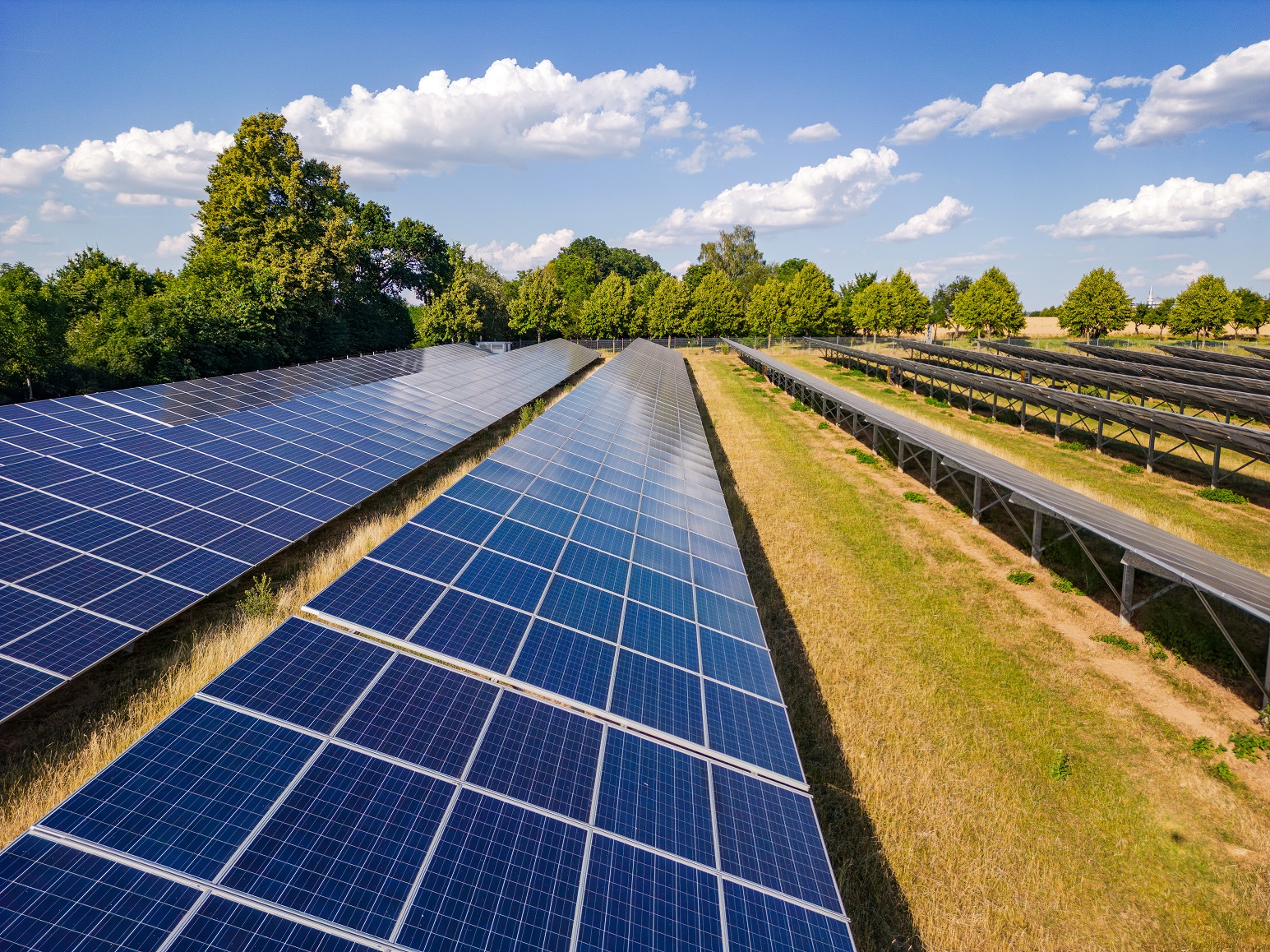
Climate change is accelerating and threatens the foundations of our lives – but there is still time to act. Solar power plays a crucial role in this transition. A new analysis by the German Environment Agency (UBA) shows that if land for solar installations is chosen wisely, solar capacity can be expanded rapidly while safeguarding areas of high ecological and agricultural value.
ambitious expansion of solar energy in Germany is possible without putting nature or agriculture at risk. This is the conclusion of a study by the German Environment Agency (UBA). Under the Renewable Energy Sources Act (EEG), installed photovoltaic capacity is set to increase from around 112 gigawatts (GW) today to 400 GW by 2040. To minimise land use, rooftop solar installations are the preferred option. However, to meet these targets quickly enough, ground-mounted solar systems will also be necessary.
Dirk Messner, President of the German Environment Agency, explains, “Wind and solar energy not only help us curb global warming, they also allow us to reduce our dependence on fossil fuels in a cost-effective and environmentally responsible way. It is both possible and essential to install photovoltaic systems in a way that preserves soil fertility and valuable natural areas. Even when developed with strong environmental safeguards, photovoltaics generate many times more electricity per hectare than energy crops – offering enormous potential for a more efficient and sustainable use of agricultural land.”
The UBA factsheet “Photovoltaics on farmland? A position paper” outlines the current state of PV in Germany, identifies areas of potential conflict and proposes solutions for expanding ground-mounted solar installations in a way that is compatible with environmental protection and agriculture.
Key recommendations:
- Prioritising solar installations on rooftops and sealed or previously used land
Photovoltaic systems should primarily be installed on buildings, car parks, landfill sites, industrial areas and other already developed or contaminated sites. - Using agricultural land only where necessary and based on ecological and economic criteria
Where additional land is required, priority should be given to areas of lower ecological value and soils of low to medium quality. Combining solar installations with existing infrastructure projects can help reduce habitat fragmentation, for example along motorways. Ecologically sensitive areas should be excluded. - Applying strict environmental standards to all ground-mounted solar systems
Ground-mounted PV systems should be designed and built to enhance the ecological value of the sites. As a minimum, the UBA recommends the following requirements be included in planning approvals:- Solar modules and associated infrastructure should cover no more than 60% of the site area
- Biodiversity-friendly vegetation management beneath and between the panels
- Ensuring wildlife connectivity, for example through wildlife corridors
- Creating site-appropriate habitat features (e.g. wildflower strips) on at least 10% of the installation area
- Excluding drained peat soils from all ground-mounted PV systems, except for so-called peatland PV projects that involve rewetting peatlands and contribute to climate protection.)
- No ground-mounted PV systems on soils or areas of high ecological value
- Soil-conserving, environmentally compatible installation, operation and decommissioning of modules, storage units, feeder lines and access roads
- Promoting agrivoltaics as efficient dual use
Agrivoltaic systems, which combine agricultural production with electricity generation, offer major potential for more efficient land use. Agrivoltaics can also reduce climate risks for farmers by protecting crops and livestock against climatic impacts (hail, heavy rainfall, sunburn) while generating electricity with very high land-use efficiency. - Reducing bioenergy crop cultivation in favor of PV
The factsheet shows clearely that conventional ground-mounted PV systems generate 28 to 50 times more electricity per hectare than maize or other energy crops. Agrivoltaic systems also produce several times more electricity per hectare than bioenergy crops. Given these substantial efficiency advantages, the UBA recommends a consistent reduction in biomass cultivation. The land freed up should be used for higher-value purposes, such as nature-friendly food production, targeted conservation measures, and the promotion of ecosystem services and climate resilience in agricultural soils.
Aligning climate action with land use
To achieve the defined expansion targets, only around 0.5% of Germany’s total land area would be required (assuming an equal split between rooftop and ground-mounted systems). Solar expansion can therefore – and should – be designed in a way that is fully compatible with environmental protection and nature conservation.