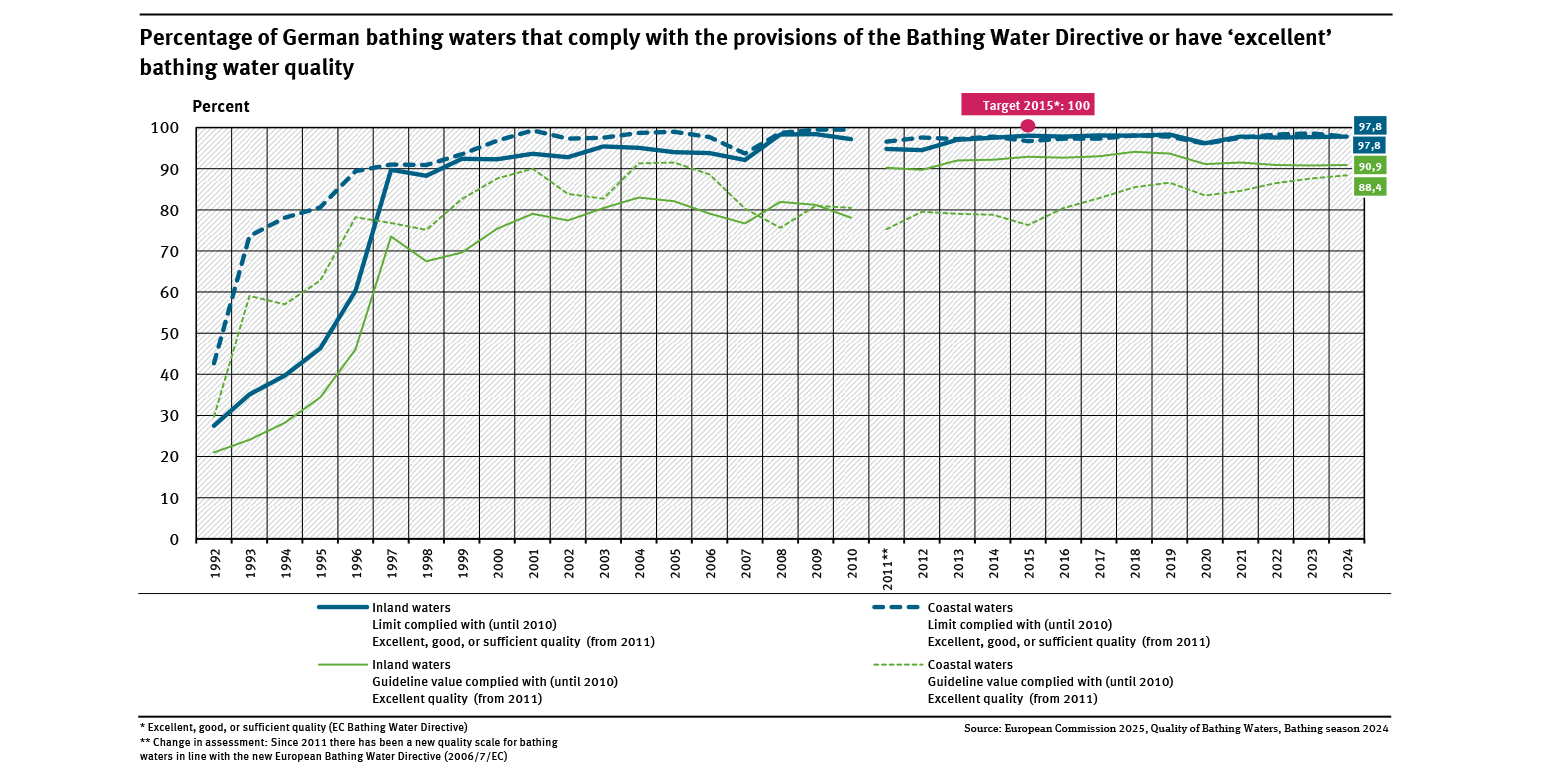
Swimming in natural waters may be associated with health risks. Like all waters, bathing waters are used for a wide range of purposes and are therefore exposed to a number of germs.
The indicator is based on the hygienic quality of the bathing water by measuring the level of faecal bacteria in the water. Bathing waters with high concentrations of these bacteria are at risk of also having pathogens present. These can cause diseases involving fever, sickness and diarrhoea. This risk is present after heavy rain, for instance, as a result of combined waste water overflow from sewage treatment plants or runoff from agricultural land. Another problem arises as a result of high temperatures and high nutrient discharges (especially phosphates). These can lead to a mass development of cyanobacteria. If these bacteria occur in large numbers, measures have to be taken. The presence of cyanobacteria is, however, not included in the quality assessment.