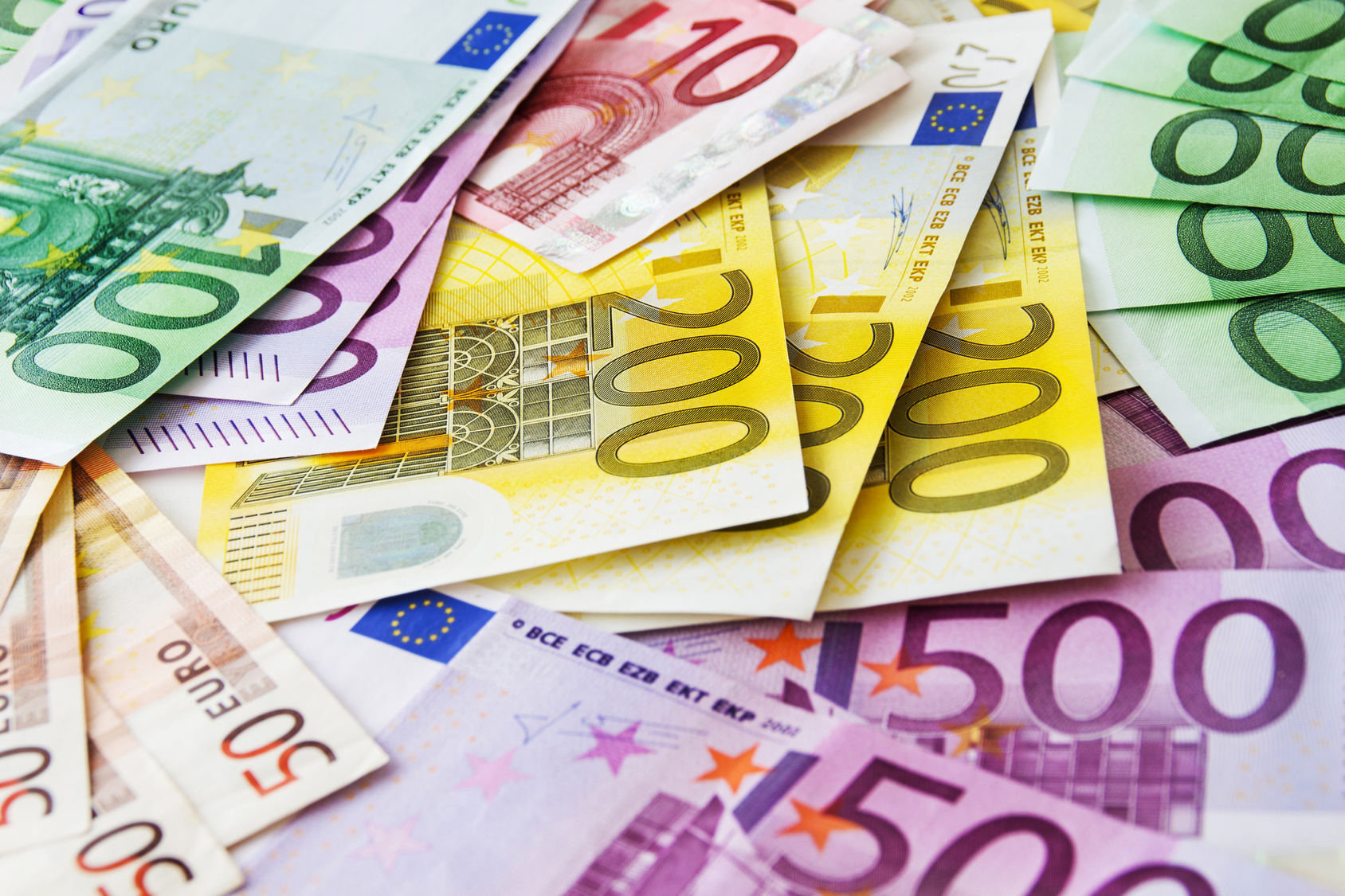
They are bad for the climate, often also for air quality and our health and cost Germany many billions of euros every year. We’re talking about environmentally harmful subsidies. This issue of the newsletter "UBA aktuell" deals with how Germany can reduce these and, in doing so, also gain financial leeway for socio-ecological change. Other topics: How can health and the environment be better protected when chemicals are a part of the economy? How should the so-called CCU technology for carbon capture and utilization be assessed from a climate protection perspective? How can tourism adapt to climate change? And how can living, working, recreation and mobility in the city and its surroundings be more sustainably interlinked?
Wishing you an interesting read,
The Press Office of the German Environment Agency
Transforming environmentally harmful subsidies into socio-ecological investments
Reduction of environmentally harmful subsidies creates the financial means for a sustainable policy.
Source: PhotoSG / Fotolia.com
It is paradoxical; the German state is promoting the switch to more climate-friendly electric cars through purchase premiums – and at the same time diesel fuels and the private use of petrol and diesel company cars through tax privileges. Economic incentives of this kind in opposing directions counteract effective climate and environmental protection and cost us all unnecessarily. Germany spent more than 65 billion euros in 2018 on subsidies that have a negative impact on the climate and often also on air quality, health and raw material consumption, according to the latest UBA figures. Almost half (47 per cent) went to the transport sector, and another 39 percent to energy supply and use, such as energy tax breaks for business.
By changing national regulations alone, Germany could generate additional revenues in the double digit billion range by reducing environmentally harmful subsidies. These revenues could then be used for socio-ecological investments, for example, supporting companies in switching to greenhouse gas-neutral production methods or ensuring upgraded and affordable bus and rail transport. The dismantling of environmentally harmful subsidies is also necessary in some cases on grounds of social justice. One example is the private use of company cars, which the state subsidises with at least three billion euros per year. "This mainly benefits households with high incomes. This subsidy is not only harmful to the environment, but also socially unjust. It should be abolished," says UBA President Dirk Messner.
The UBA has presented concrete reform proposals that both advance environmental and climate protection and take social goals into consideration. Fundamentally, only subsidies that are in line with sustainable development should be granted.
Making climate-friendly consumer choices with Big Points
Big Points make it easier for consumers to make climate-friendly consumption choices in order to effectively reduce their CO₂ footprint. The Competence Centre for Sustainable Consumption provides share pics and information material for free download and use to promote awareness of the concept of Big Points in climate protection communication. read more (in German)
Supporting research with the personal CO₂ balance sheet
More than three million people have already used the CO₂ calculator from the German Environment Agency (UBA) since its launch in 2008 to calculate their personal CO₂ footprint. A new research project is now investigating the differences, for example, by city and region or by housing situation - and is relying on the help of citizens to do so. read more (in German)
The German Environment Agency (UBA) is calling for the sustainable use of chemicals. At its Sustainability Transformation Conference held on 30.11.2021, UBA identified six key aspects of chemicals management that protects human health and the environment. These include giving preference to the use of non-harmful substances and achieving climate neutrality of chemicals throughout their life cycle.
The German Environment Agency (UBA) is calling upon businesses to review their packaging systems and optimise their environmental friendliness. Significantly more reusable products would also have to be introduced – not only in beverage packaging but also in other areas, such as e-commerce and to-go consumption.
Organic milk production from cows that graze in pasture is more favourable for the environment. The main reason is how the feed is produced. These are the results of a study commissioned by the German Environment Agency (UBA) which analysed the environmental impact of various milk production systems in Germany and assessed their environmental cost.
In autumn 2021, the new European research project "ZeroPM: Zero Pollution of Persistent, Mobile substances" will start. The German Environment Agency (UBA) is involved as a project partner. ZeroPM will develop political, technological and market-based tools that aim to reduce the use and emissions of persistent and mobile substances as well as contamination from such substances.
Climate protection in transport
Mobility is an indispensable part of daily life. The transport sector, however, is also one of the largest emitters of greenhouse gases in Germany. If the requirements of the Paris Climate Agreement and the 2030 target of the Federal Climate Protection Act are to be met, the transport sector must quickly and drastically reduce its greenhouse gas emissions. The UBA has presented proposals in this regard. read more (in German)
New substance lists for the investigation of biocides in the environment
In 2017, the UBA issued recommendations on the survey of environmental pollution with biocides. In the process, lists of biocides that are likely relevant and therefore need to be investigated were compiled for various input pathways into the environment and environmental compartments, such as surface waters or agricultural soils. These lists of substances have now been updated and extended with the addition of two new lists. read more (in German)
The greenhouse gas-neutral economic system of the future will continue to rely on hydrocarbons, for example in the chemical industry for the production of plastics or in aviation and maritime transport for the production of synthetic fuels. The carbon will be sourced from a new carbon circular economy but mainly from the atmosphere. The energy needs to come from fully renewable sources.
The construction sector is the second-largest consumer of plastics with a volume of some 2.6 million tonnes used in 2017. However, proper guidelines for the recycling of plastic building products are still lacking, and recycling volumes are not recorded adequately.
Climate change in Germany is causing more heat, increased drought combined with water shortages and forest fires, less certainty of snow and an increase in heavy rainfall and flooding at the same time. A new study commissioned by the German Federal Environment Agency (UBA) shows how these changes will affect tourism and what adaptation strategies are possible.
Protecting facilities at risk of cyber attack disruption
Cyber security is an elementary part of preventive measures for facilities handling hazardous substances in order to guard against tampering by unauthorised persons. In a joint study, the Federal Office for Information Security and the German Environment Agency have investigated the extent to which cyber security is already taken into account in regulations and have formulated recommendations for action. read more (in German)
Green technologies for developing countries
Environmental innovations from Germany can make an important contribution to achieving sustainability goals in emerging and developing countries. In addition, the development of these markets offers export opportunities. It is particularly important for the innovation process, however, to take the requirements and conditions of the target market into consideration right from the start. read more (in German)
Promoting the dissemination of environmental innovations in a more targeted manner
If environmental innovations are to realise their full potential, they need to be established on the market. Many innovations, however, remain in a market niche. A study commissioned by the UBA therefore suggests, for example, that follow-up innovations and the testing of innovations in real laboratories or transformation regions should be promoted more actively. read more (in German)
Non-woven production for air filters possible with 70% less energy
Whether for air filters to protect against coronaviruses or for recirculating air conditioning systems in electric cars - non-wovens are increasingly in demand. Funding from the Environmental Innovation Program was used to implement an innovative manufacturing concept on an industrial scale for the first time, enabling energy savings of 70 percent as well as material savings. read more (in German)
Environmentally friendly printing with the Blue Angel - new criteria
The Blue Angel for printed products (DE-UZ 195) identifies products that are manufactured in a manner that protects the environment and conserves resources. The criteria have been updated: the removability of printing inks, coatings and adhesives has been further developed, the avoidance of persistent perfluorinated and polyfluorinated substances has been specified, and the limit values for volatile organic compounds have been tightened. read more (in German)
Despite their separate administrative remits, cities and the urban hinterland are nevertheless closely linked and mutually dependent upon one another. A new strategy paper titled UMLANDSTADT umweltschonend shows how to link work and private life, recreation and mobility in cities and the surrounding areas, in order to increase the quality of life and to better protect the environment.
“Public administrations must pioneer and be a role model in climate protection”, said Dirk Messner, President of the German Environment Agency (UBA) at an online meeting of the Network of Heads of European Environmental Administrations (EPA Network) on November 25th. He presented UBA’s guide on greenhouse gas neutral administrations, now also available in English.
New 10-year plan for the protection of the Baltic Sea adopted
Baltic Sea countries and the European Union adopted an action plan for the protection of the Baltic Sea on 20.10.2021 at the Helsinki Commission Ministerial Conference chaired by Germany. 30 percent of the Baltic Sea is to be placed under protection and impacts from waste, nutrients and pollutants, munitions waste and noise are to be reduced. read more (in German)
EU Commission proposes comprehensive reform of emissions trading
Achieving the EU's 2030 climate protection target necessitates a reform of the EU Emissions Trading Scheme (EU ETS). Measures include reducing the quantity of certificates issued and expanding financial support for climate protection initiatives. Moreover, maritime transport is to be included in the EU ETS in the future and a new emissions trading system for buildings and road transport is to be created. read more (in German)
A new evaluation by the German Environment Agency (UBA) reports that municipalities, retailers and producers in Germany collected 947,067 tonnes of electrical waste in 2019. The amount corresponds to a collection rate of 44.3 percent, which means the minimum collection target of 65 percent which was set for all EU member states in 2019 was missed and fell short of some 443,000 tonnes.
Heating Energy Consumer Information Guide
From 01.01.2022, building owners must inform all tenants who have already installed remote-reading meters about their energy consumption for heating and hot water on a monthly basis. A guide from the UBA shows how such information can be arranged so that it is legally compliant, easy to understand and motivates people to save energy. read more (in German)
Standards and regulations - deficits in adaptation to climate change
In many areas of the economy and society, standards and regulations stipulate how individual matters should and must function. This is to ensure security as well as compatibility. Climate change adaptation should be urgently incorporated into such specifications. A study commissioned by the German Environment Agency has shown that there is still a need to catch up in this area. read more (in German)
Proposed restriction on bisphenol A: renewed consultation
All stakeholders, such as concerned industry associations and companies, are invited to complete the questionnaire on the proposed restriction on bisphenol A (BPA) and bisphenols with a similar concern (BosC) by 22nd December 2022. The restriction would apply to the manufacture, market distribution and use of BPA and BosC in the EU. read more (in German)
UBA News
Dr Lilian Busse appointed as the new Vice-President of the German Environment Agency
Dr Lilian Busse was appointed as the new Vice President of the German Environment Agency (UBA) on 27th September 2021. State Secretary Jochen Flasbarth (Federal Environment Ministry) and UBA President Dirk Messner congratulated her on her inauguration during a virtual staff meeting at the UBA. read more (in German)
Ideas for new initiatives across four policy areas and how to use existing international venues as stepping stones
Multilateral initiatives and cooperation can be effective means to increase ambition and action to achieve the goals of the Paris Agreement. This synthesis report summarizes the proposals for new initiatives in four policy fields – energy transition, synthetic e-fuels, sustainable food systems and forest protection. It further analyses interactions, synergies and trade-offs between the policy…
In October 2020, the European Commission launched the Chemicals Strategy for Sustainability that calls to counter emerging risk with preventive action. This report aims to place this strategy in the context of the debate on the precautionary principle in the EU and to derive policy options to advance REACH in order to strengthen the control of emerging risk. The report assesses the general…
Analysis of damage and mitigation frameworks and guidance for political use
Monetizing climate costs is an important instrument to highlight the benefits of climate protection. This research report presents and compares the damage cost and the mitigation cost approaches. Both approaches are fundamentally different and for different questions either the one or the other gives the conceptionally correct answer. The report shows the basic procedures, crucial modelling…
This executive summary presents shortly the contents of the six sub-reports of the "Climate Impact and Risk Analysis 2021 for Germany", for which 102 climate impacts and 13 fields of action were investigated and assessed. The methodology and the basics of the projections as well as the generic adaptation capacity are addressed. The most important results for all 13 fields of action are presented…
Under Carbon Capture and Utilization (CCU) we summarise all relevant technologies for capturing, transport, and the subsequent utilisation of carbon. In the promising perspective CCU seems to reduce emissions by substitution of fossil products. For the evaluation we have to apply a more holistic view on these technologies and especially their energy consumption. In order to clarify the role of CCU…
This documentation summarises the presentations and the discussions of the international online conference "Limiting Health Impacts of Construction Products regarding Volatile Organic Compounds" organised by the German Environment Agency in April 2021.
The conference presented the current status of harmonisation activities on the topic of construction product emissions as well as a concrete…
Environmental authorities globally are challenged with the complexity of problems associated with contaminated sites. For protecting human beings and the quality of the environmental media air, water and soil, the prevention and elimination of hazards as well as impact mitigation are crucial. This manual presents information and solution-oriented procedures for all stakeholders with a focus on…
This study presents in detail: the use of plastic products and the opportunities for recyclate use in the construction sector, quantities of plastic used, take-back systems, recycling techniques, current recyclate use and plastic construction product packaging.Potentials for increasing high-quality recyclate use were identified. Existing hurdles and options for action for industry and politics are…
Over the past 10 years, the amount of packaging generated across the EU has increased by almost 18 percent, with around 66 percent of packaging waste being recycled. The revision of the Packaging Directive should therefore primarily help to strengthen waste prevention, the recyclability of packaging and the use of recyclates and further develop information requirements. Material requirements…
Influence of market structures and market regulation on the carbon market
Electricity generation is the largest source of greenhouse gas emissions in many countries. Most emissions trading systems (ETS) therefore address emissions from electricity generation. The de-sign of an ETS and the structure and regulation of the electricity sector have a large impact on the environmental effectiveness and the quality of the carbon price signal. This report analyses the potential…
A guide of the German Environment Agency (UBA) supports public administrations being a role model of climate protection. To this end, it presents nine stages on the path to greenhouse gas neutral administration. For each stage, it describes the steps and challenges and provides practical recommendations for all relevant issues. Furthermore, the guide contains methodological, organizational and…
A global, inclusive goal for the sustainable use of chemicals is needed to safeguard both societal wellbeing and earth’s life-sustaining capacity
4
As recounted
1/5
How we eat has an impact on the climate. For every kilogram of cow's milk, greenhouse gases with a climate impact of about 1.4 kilograms of CO₂ are emitted. For the same amount of oat drink, only 0.3, i.e. only about a fifth. More figures can be found in the publication "Ökologische Fußabdrücke von Lebensmitteln und Gerichten in Deutschland” (Ecological footprints of food and dishes in Germany), which was produced as part of a study co-funded by the UBA.