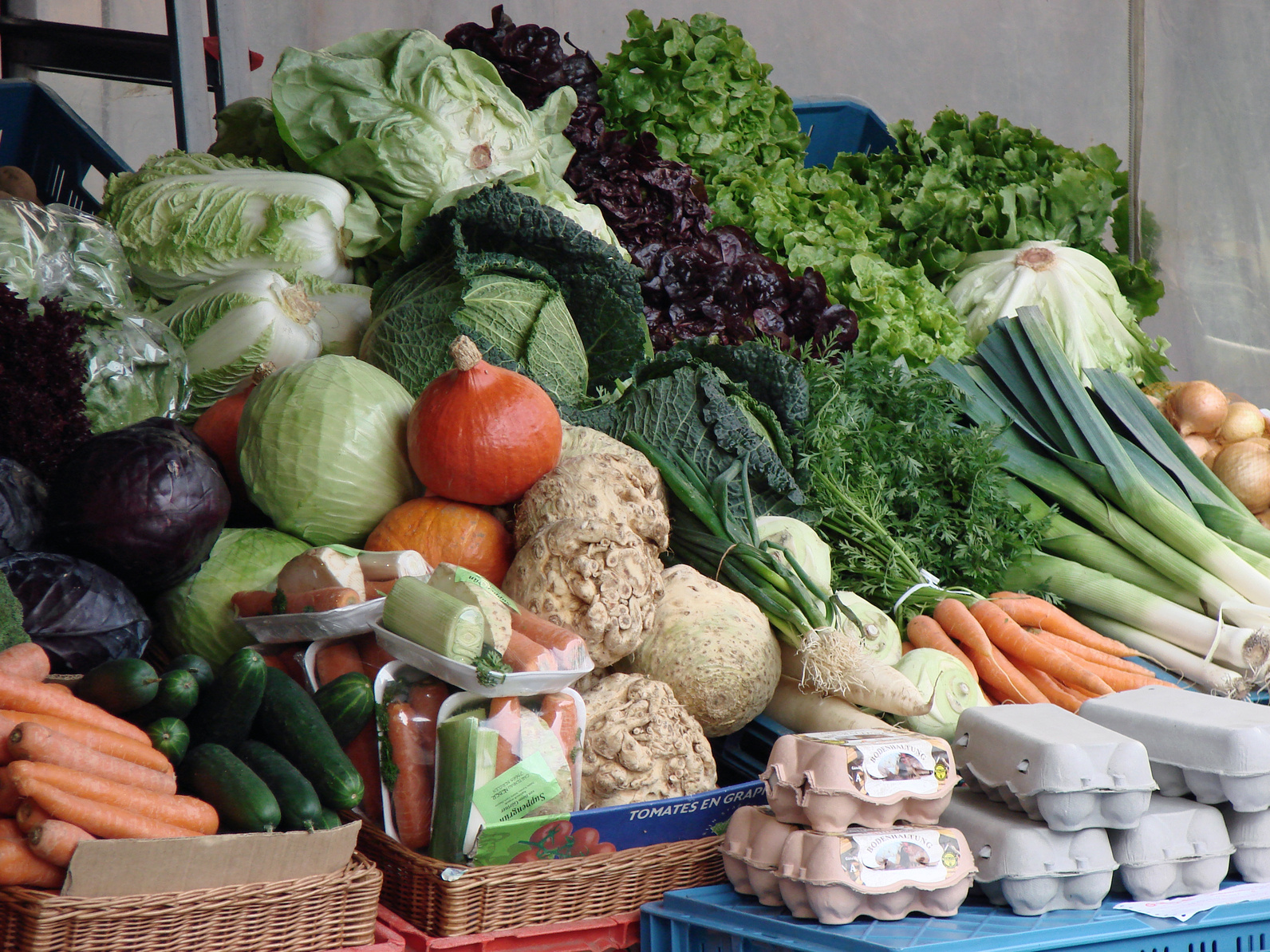
Recently the European directive on the common system of VAT was amended. It states “Member States should be given the possibility to contribute to a climate-neutral and green economy by means of applying reduced rates on environmentally friendly supplies while, at the same time, preparing the phasing out of the existing preferential treatment of environmentally harmful supplies.” Before this background, UBA developed proposals for a reform of the German VAT system. In this newsletter, we lay out our proposals for ensuring that the German VAT system takes environmental aspects into account going forward, and that citizens get some relief in the face of rising prices.
We also include the action plan for the sustainable digital transformation of the CODES global network, which involves stakeholders from more than 100 countries. Noteworthy, too, are the results of HBM4EU, the European Human Biomonitoring Initiative, coordinated by the German Environment Agency, which were presented at an international final conference in Brussels. According to the findings, people in Europe are sometimes exposed to worryingly high levels of pollutants.
Wishing you an interesting read,
The Press Office of the German Environment Agency
Shaping value added tax ecologically and socially
The UBA proposes to exempt plant-based staple foods such as fruit and vegetables from VAT.
Source: Volker Gerstenberg / Fotolia
Germany’s VAT system doesn’t account for ecological aspects and only partially takes social aspects into consideration. The government could change this by reforming VAT, and at the same time take some of the pressure off citizens in the face of rising food and mobility costs. The recent amendment of the directive on the common system of VAT creates a new scope to do this. The German Environment Agency has now submitted concrete proposals for a “Climate and Environment Relief Package”.
The package includes a VAT exemption for basic plant-based foods such as fruit, vegetables, cereal products and vegetable oils. According to an initial estimate, this would save households about 4 billion euros per year. In relative terms, lower-income households would benefit the most from this. The package also includes a VAT exemption for public transport as buses and trains which would save citizens about 2 billion euros per year and provide an incentive to use public transport. The German Environment Agency also proposes further tax breaks, for example for climate protection measures such as installing solar panels and optimization of heating systems. On the other hand, meat and other animal-based products, that cause a high environmental burden, should be taxed at the regular VAT rate of 19 percent, instead of their current reduced rate of 7 percent. For social reasons this step should not be taken now, but only in the near future.
German Environment Agency President Dirk Messner: “Environmentally friendly products should be made cheaper, and those that are environmentally harmful should no longer be subsidised by the state through taxes that are too low. Our Climate and Environment Relief Package focuses on the sharp rise in food prices and mobility costs. It will provide immediate relief to household budgets and protect the environment at the same time.”
Over 96 percent of German bathing waters were rated "excellent" or "good" by the EU Commission in the 2021 season. Overall, 98 percent of bathing waters on lakes, rivers and coasts in Germany met the minimum requirements of the EU Bathing Water Directive.
Making Germany more crisis-resilient and sustainable
Saving energy isn’t just about fighting climate change: it’s also about reducing our dependence on fossil fuels and thereby becoming more resilient to crises. And ultimately, saving energy is the most effective way of combating rising prices in the short term. Our tips for consumers. read more (in German)
GehCheck app: Check the route ahead
With the GehCheck app (in German), it’s easy to check out pedestrian routes for yourself. This smartphone app transforms your walk or the same old route you take every day into an exciting field analysis opportunity. You can use it to log danger points, obstacles and suggestions for improvement, but also to leave praise for good pathways and places where you feel comfortable. Everything that has been logged appears on a map on the internet. read more (in German)
UBA positions
Climate Change Act: Set sectoral targets in percentage terms
In a joint paper, the German Environment Agency (UBA) and the Thünen Institute (TI) argue that the Climate Protection Act should take methodological advances in greenhouse gas reporting into account and set targets in the form of percentage reductions, rather than absolute annual maximum amounts. read more (in German)
How the federal and state governments can contribute to more environmental justice
Addressing urgent challenges such as increased urbanisation, climate change and social inequality requires a broad commitment across various different levels in Germany. In order to strengthen environmental justice, the federal and state governments should provide a legal and policy framework, expand their partnerships, support municipalities and spread information about environmental justice. read more (in German)
Science & Research
Sustainable consumption: Unlocking more climate-saving potential
More car sharing, better energy advice, fewer meat-based meals and other measures to promote sustainable consumption could save an additional 12 to 20 million tonnes of greenhouse gases per year in Germany by 2030. This would be the result of 13 proposed measures to reduce greenhouse gases, which the Öko-Institut investigated on behalf of the German Environment Agency. read more (in German)
Urban mining: Using existing goods and building sites as stores of raw materials
Germany’s stock of man-made materials is a treasure trove that can help to cover our raw material needs. This treasure trove should be used more systematically in the future through urban mining, which is the extraction of secondary raw materials from buildings, infrastructure, vehicles and other durable goods. This requires a reliable knowledge base of material flows and incentives for new technologies. read more (in German)
Biocides in animal farming: Minimising the environmental impact
A research project has examined the practical application of biocides for disinfection and insect control. In order to minimise environmental contamination, it is recommended, for example, to strictly comply with temperature and quantity specifications for disinfectants and to integrate them into a holistic hygiene management strategy. read more (in German)
Long-distance transport with a big environmental impact
Greenhouse gas emissions from transport are essentially determined by long-distance transport between metropolitan areas (for passengers) and hubs (for freight). In the course of a research project commissioned by the German Environment Agency, strategies and solutions were identified that significantly reduce greenhouse gas emissions from long-distance transport. read more (in German)
Switching to climate-friendly refrigeration and air conditioning holds tremendous greenhouse gas emissions savings potential, but the switch to natural refrigerants poses a great challenge for many businesses. The new initiative “Climate-friendly Cooling and Air-Conditioning with Natural Refrigerants” brings together relevant players in industry.
CO₂ emissions per kilowatt-hour of electricity increase again in 2021
The amount of specific greenhouse gas emissions in the German electricity mix has risen again, after falling in the years leading up to 2020. This is indicated by the most up-to-date calculations from the German Environment Agency. On average, generating one kilowatt-hour of electricity resulted in 420 grams of CO₂ in Germany in 2021. In 2020 this value was 375 g/kWh, and in 2019 it was 411 g/kWh. read more (in German)
Electricity price compensation: 2020 assessment report now online
In 2020 325 German companies received about 833 million euros in subsidies to compensate for the indirect CO₂ costs of EU emissions trading. This finding emerged from the most recent report by the German Emissions Trading Authority (part of the German Environment Agency) on so-called electricity price compensation. read more (in German)
Temporary play streets, street sponsors, a cargo cycle festival or a “walking machine parade” are among the diverse actions promoting more sustainable mobility which cities, municipalities and nonmunicipal actors such as businesses, associations and schools registered in the competition. Fürstenfeldbruck, Karlsruhe, Kassel and Leipzig are winners of national prize for European Mobility Week.
The Coalition for Digital Environmental Sustainability (CODES) aims to help reorient and prioritize the application of digital technologies to meet the 2030 Agenda for Sustainable Development and address the triple planetary crisis of climate change, biodiversity loss and pollution and waste.
Some of Europe’s population have alarmingly high levels of exposure to pollutants. This is the conclusion of the European human biomonitoring initiative HBM4EU, coordinated by UBA. Plasticisers were detected in all children and adolescents examined, and per- and polyfluorinated alkyl substances (PFAS) are also present in human blood in quantities that are in some cases too high.
How dangerous are chemicals that we use and come into contact with every day? The "PARC" initiative of the European Union (EU), launched in Paris on 11 May 2022, is breaking new ground in the assessment of chemical substances. The aim is to improve knowledge about chemical substances in order to better protect human health and the environment.
On 25 May, United States Environmental Protection Agency (EPA) Administrator Michael S. Regan met with German Minister for the Environment, Nature Conservation, Nuclear Safety and Consumer Protection Steffi Lemke and President of the German Environment Agency Prof. Dirk Messner, in the realms of the meeting of the G7 environment, climate and energy ministers in Berlin.
IPCC report: Immediate global turnaround required
The Intergovernmental Panel on Climate Change (IPCC) has completed its Sixth Assessment Report. According to the report, it is still possible to limit global warming to 1.5°C by 2100. However, this would require an immediate global turnaround and far-reaching greenhouse gas reductions in all regions of the world and across all sectors. read more (in German)
Law & Legislation
UMID 01/2022: Are pesticides endangering the groundwater?
In UMID 01/2022, gaps in the approval process for crop protection agents are addressed. These relate to certain degradation products. We need strategies for effectively reducing the harm that these products do to the environment. Other topics: The new UFI product identifier, the ZePaK project (which investigates ticks and their pathogens in relation to climate change), the risks and dangers of laser pointers etc., as well as the concept of Planetary Health. read more (in German)
The recipients of the tandem scholarship "The Landscape as a Place of Transformation" as part of the OSTEN Festival have been selected. During their two-month stay, the artists will work on projects together with experts from the UBA and contemporary witnesses from Bitterfeld-Wolfen. They will present their results at the "OSTEN" festival in Bitterfeld-Wolfen from 1 - 17 July 2022.
The German Prize for Nature Writing 2022 goes to Levin Westermann. Katharina Mevissen and Hannah Zufall each win a scholarship to attend the international Nature Writing Seminar by Stiftung Kunst und Natur in Bad Heilbrunn in autumn 2022. The award ceremony will take place in Berlin on Sunday, 28 August 2022.
Germany is obligated to report its national emissions of greenhouse gases, annually, to the European Union and the United Nations. Over 80 % of the greenhouse-gas emissions reported by Germany occur via combustion of fossil fuels. The great majority of the emissions consist of carbon dioxide. To calculate carbon dioxide emissions, one needs both the relevant activity data and suitable emission…
Administrative structure and implementation challenges
The European Commission has proposed to introduce a carbon border adjustment mechanism (CBAM) in order to improve Carbon Leakage protection for European energy-intensive industries which are subject to the carbon price in EU ETS. This report details the Commission’s proposed administrative structure as well as its implications for Member States. It analyses the tasks, responsibilities and…
The project "KartAL III - Mapping of the Anthropogenic Stock III", commissioned by the Federal Environment Agency, focuses on the recovery options and expected material flows of nine mineral building materials. In order to significantly improve the circular economy through urban mining in Germany, the potentials, approaches and success factors of relevant stakeholders identified in the project…
Air quality projections, protection of ecosystems, assessment methods, monitoring concept
In preparation for the upcoming revision the German Environment Agency (UBA) from a scientific point of view has assessed the possibility to meet the proposed WHO Guidelines Levels, the applicability of improved chemical transport models and advanced monitoring methods for air quality assessment as well as concepts for a better protection of ecosystems from air pollutants. In the following we…
Identification and quantification of PetCo constituents/constituent groups by means of comprehensive chromatographic analysis
Petroleum and coal (PetCo) based substances are usually of complex composition. This makes their analytical characterisation challenging. The aim of this project was to develop an analytical concept to be applied on a selection of five PetCo products, to identify those constituents or constituent groups that might be of concern for the environment and human health. Three analytical platforms were…
The report summarises and evaluates the current state of knowledge on organic contaminants in polar regions that have become significant concerns because of their persistence, bioaccumulation and toxicity potential. Climate change can also alter the biogeochemical cycling of persistent organic pollutants (POPs) and emerging organic contaminants (EOCs). The report concludes that continual…
The study was to undertake a legal analysis of the Extended Producer Responsibility (EPR) provisions of the EU Directive 2019/904 on the reduction of the impact of certain plastic products on the environment (Single-Use Plastics Directive, SUPD) with a view to its implementation in Germany. In a first step the EPR concept of the SUPD is compared with the EPR concept in other pieces of EU waste law…
This conference paper gives a detailed overview of the international online-event ‚Green Cooling Summit‘ which took place from 25. to 27. May 2021. The central issue was the HFC phase down according to the Kigali Amendment to the Montreal Protocol and how it can be implemented with natural refrigerants. Talks adressing this issue were given by representatives of parties to the Montreal protocol as…
This report offers a stocktaking of conflict sensitivity and adaptation in theory and practice. While the actual guide for conflict-sensitive adaptation stands for itself, this publication provides the basis by identifying key design elements of a guide on conflict-sensitive adaptation through a review of existing guides on conflict sensitivity in general and how adaptation to climate change is or…
This information paper presents the results of a comprehensive analysis of the German market for voluntary offsetting of greenhouse gas (GHG) emissions for the years 2017 to 2020. The analysis serves to create a basis for assessing the potential and thus for the development of incentive structures and framework conditions for national climate protection projects in Germany. Past market surveys on…
The report analyzes, by looking back at existing compliance systems in the EU, Alberta, Australia, Colombia and Japan, the conditions under which offsets can add value to the compliance system without undermining its environmental integrity. The compliance system’s climate ambition as well as the efficiency of the institutions, processes and infrastructure that are used for the generation and…
Greenhouse gas emissions from transport are mainly determined by long-distance traffic between conurbations in passenger transport and traffic hubs in freight transport. In the course of the project "Options for action for an ecological design of long-distance mobility in passenger and freight transport", strategies and solutions were identified that effectively reduce the greenhouse gas emissions…
National Inventory Report for the German Greenhouse Gas Inventory 1990 – 2020
As a Party to the United Nations Framework on Climate Change (UNFCCC), since 1994 Germany has been obliged to prepare, publish and regularly update national emission inventories of greenhouse gases. Pursuant to Decision 24/CP.19, all Parties listed in ANNEX I of the ?UNFCCC? are required to prepare and submit annual National Inventory Reports (NIRs) containing detailed and complete information on…
Im November 2018 veröffentlichte die Europäische Kommission ihre Strategische Langzeit-Vision „Ein sauberer Planet für alle“ mit dem Vorschlag spätestens in 2050 EU-weit Netto-Null-Treibhausgasemissionen zu erreichen. Durch das EU-Klimaschutzgesetz wurde das Klima-Neutralitätsziel rechtlich verbindlich. Dieser Forschungsbericht bewertet die Strategische Langzeitvision der Europäischen Kommission…
The European Commission recently announced a targeted revision of the REACH Regulation, in view of strengthening the level of protection from hazardous chemicals and simplifying the legal text.
The German Environment Agency makes in this Scientific Opinion Paper specific recommendations, including on compliance checks for registration dossiers, additional information requirements, a simplified…
Biocides that are released into the environment can have unintended negative environmental effects. The aim of this project was to analyse the current agricultural practice related to the use of disinfectants (PT 03) and insecticides (PT 18) in animal husbandry. Based on the results, recommendations for the application of biocidal products in livestock farming were developed to minimise possible…
The European Emissions Trading System (EU ETS) constitutes a central European climate policy instrument. Since its start of operation in 2005, the carbon market has grown considerably in terms of trading volume and also with regard to the various players being active. This report aims to give an insight on the specific trading behaviour of market participants from the energy and financial sector…
Sustainable cooling and heating of buildings is becoming more and more important – this years Green Cooling Summit leads the way to hands-on solutions. The event jointly organized by GIZ Proklima and the German Environment Agency on the behalf of the German Ministry for the Environment will be held again as a pure online format.
This international online conference on 15.09.2022 marks the kick-off of the UBA flagship project "Advancing the New European Bauhaus” (AdNEB). The event features experts from the field and interesting discussions. The Goal of the “New European Bauhaus” initiative: climate adaptation and a better quality of life.
Microplastics are usually associated with marine pollution. But scientific studies are increasingly pointing to soils being a major sink for plastic debris. On October 19-20, 2022 the German Environment Agency (UBA) will hold an international (hybrid-)conference in Berlin to shed new light on the impact of plastic pollution on soils.
As recounted
65
According to calculations by the German Environment Agency, national subsidies on environmentally harmful products amounted to 65 billion euros in 2018.