
The environmental costs of agriculture stem from a number of impacts, most of which are more pronounced for intensive forms of agriculture:
- greenhouse gas emissions (animal husbandry, machinery and vehicles, land use change);
- nutrient emissions into the soil, water and atmosphere from the use of fertilizers and animal husbandry (manure);
- direct impacts of intensive agricultural production processes on biodiversity, ecosystems and also agricultural soils.
Overall, agriculture is considered one of the main reasons for the loss of habitats for animals and plants. However, robust value factors to assess the impacts of agriculture on biodiversity and most ecosystem services are currently not available.
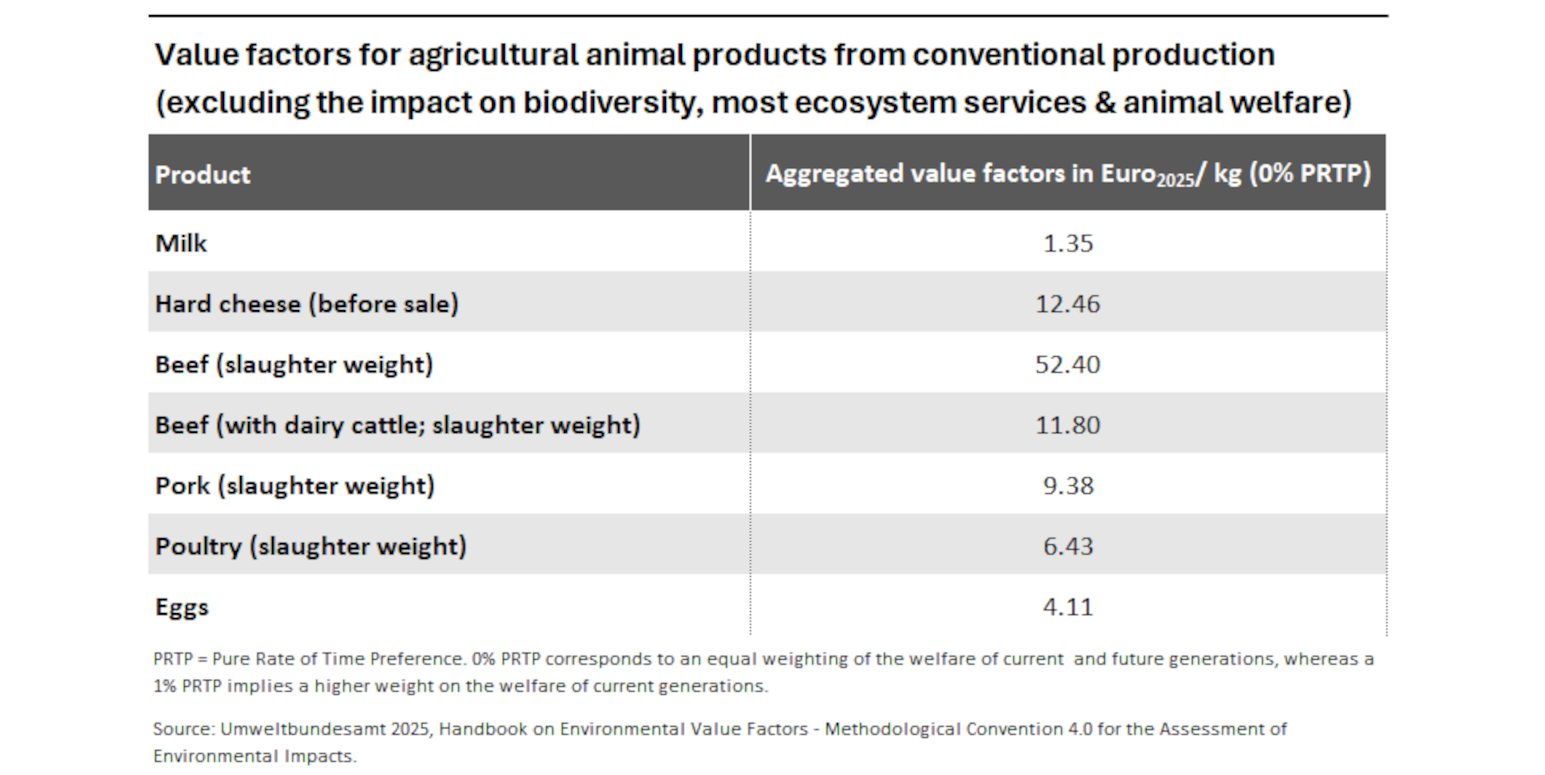
Such are greenhouse gas and nutrient emissions.
Source: Umweltbundesamt