
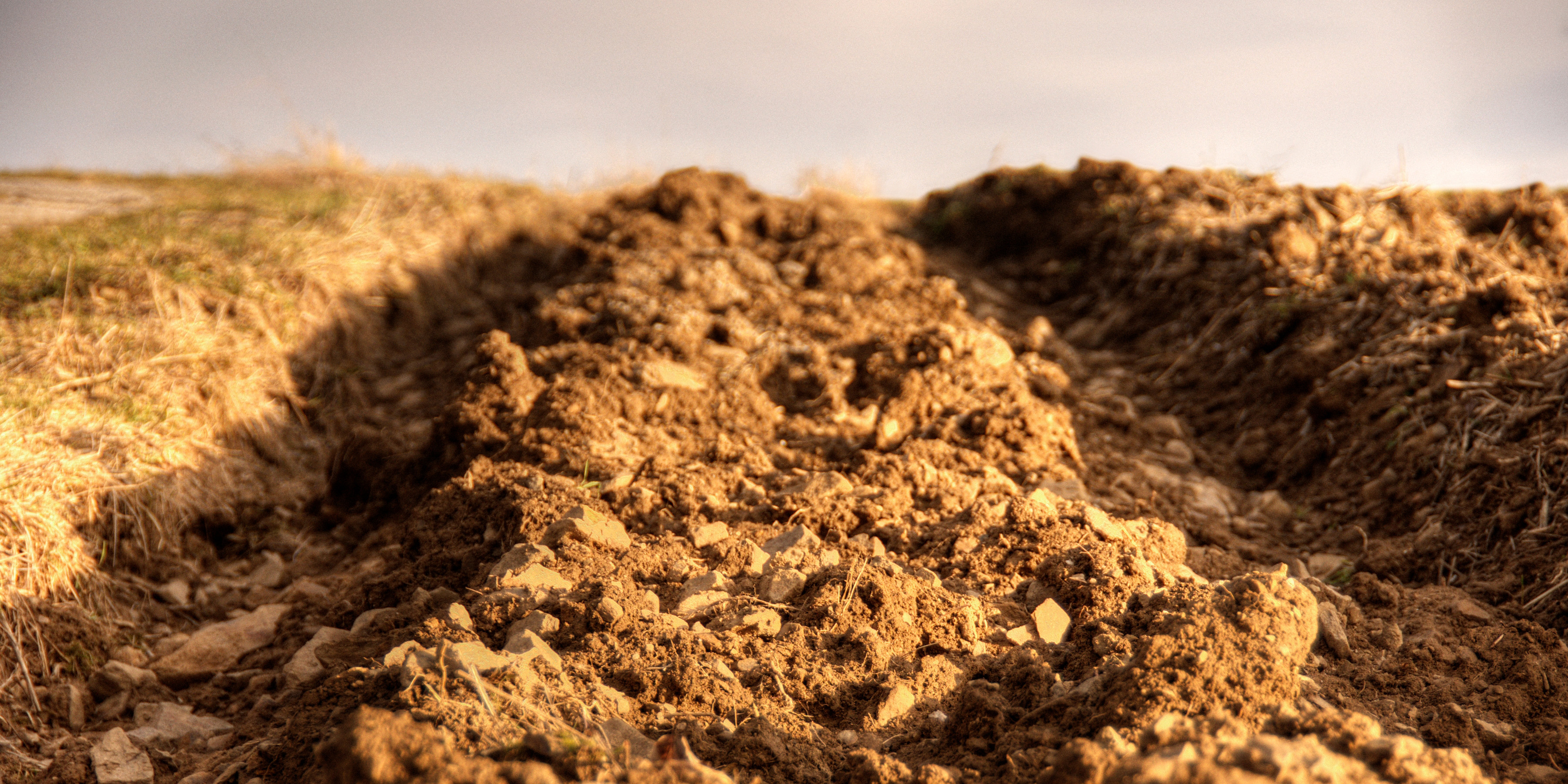

Soil erosion by water
Water erosion involves the displacement of soil material at the soil surface by water. The topsoil removed in this way is either deposited elsewhere or flushed into a body of water. Erosion risk is influenced by the amount and intensity of precipitation, the slope, the soil type, the soil structure (including humus content), the degree of soil cover, and the land use and cultivation. If the amount of precipitation exceeds the infiltration capacity of the soil, the water runs off the surface and thus increases the risk of soil erosion. This applies in particular to soils that are compacted and temporarily without plant cover. Sloping areas with sand-rich soils are particularly at risk of water erosion.
Soil erosion through water erosion results in a reduction of soil thickness, loss of nutrient-rich and humus-rich topsoil and thus loss of soil fertility. If it enters water bodies, this can lead to water eutrophication through increased growth of algae and cyanobacteria. Consequential damage from soil removal and material deposition would continue to be the impairment of agricultural use through silting, the silting of water bodies or receiving water bodies, the impacts of traffic and settlement areas and sewer systems, and the decline of biological diversity.
Climate change may lead to a shift in precipitation patterns, i.e. periods of high temperatures and low precipitation in the spring and summer months and an increase in precipitation in the winter months. More frequent and longer dry periods in the summer half-year lead to an increase in the drying out of the topsoil. Since a severely dried-out soil initially has poor water absorption capacity when precipitation begins, surface runoff occurs, taking soil particles with it. Climate change could increase the probability of soil erosion events due to an increase in heavy rainfall events, especially in winter.
Indicator from the monitoring on the DAS: Rainfall erosivity